
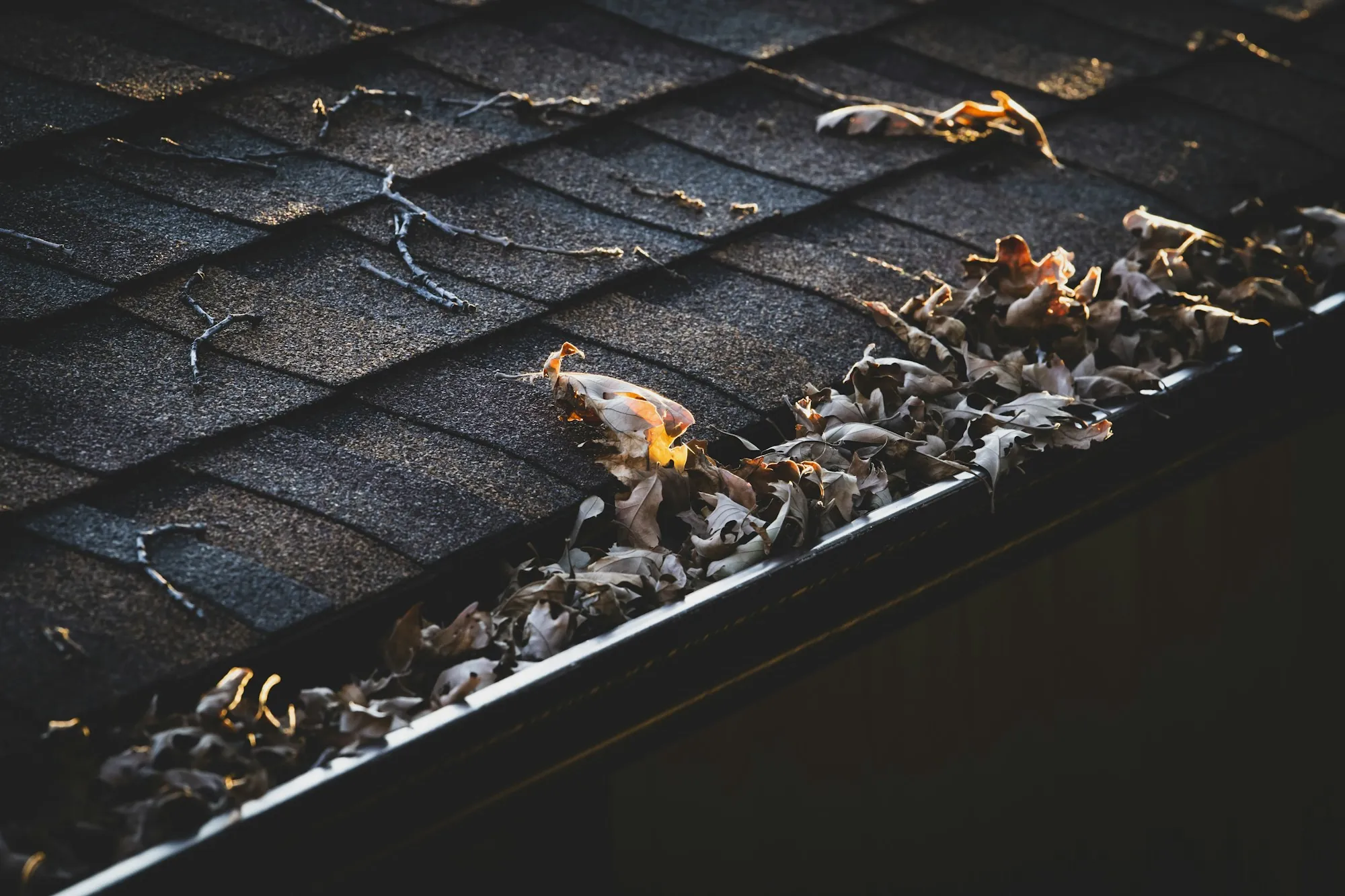
Why would a gutter full of leaves hurt the roof, when the gutter sits below the shingles? Because a clogged gutter stops being a channel and becomes a dam, and the water it holds back has to go somewhere: over the front lip, behind the gutter into the boards at the roof edge, or back up under the lowest row of shingles. On a Duluth house shaded by oaks and pines, that can happen several times a year, and the damage builds quietly between storms. Below are the six ways clogged gutters damage a roof and the fascia line behind it, and how to spot each one before it turns into a bigger repair.
Key takeaways
- A clogged gutter holds water and wet debris against the roof edge instead of carrying it away.
- The first parts to suffer are usually the drip edge, the roof decking along the eave and the fascia board behind the gutter.
- The weight of soaked leaves and standing water can pull hangers loose and tip a gutter away from the house.
- Overflow lands right beside the foundation instead of at a downspout outlet several feet away.
- Standing water in a blocked gutter is a mosquito breeding site, according to UGA Extension.
- Most of the warning signs, from sagging runs to stained boards, can be seen from the ground.
1. Water backs up under the first course of shingles
When a gutter is packed with leaves, rainwater rises in the trough until it reaches the roof edge, and on a low-sloped eave it can wick back under the starter course and the first row of shingles. Shingles are designed to shed water downhill, not to hold back water that is pushing uphill from a full gutter, so that backed-up water reaches the drip edge, the underlayment and the wood beneath. It does not need a dramatic storm to happen; an ordinary afternoon thunderstorm on a gutter that has been filling since fall is enough, and the water often drains back out before anyone sees it, leaving the wood a little wetter each time.
2. The roof decking along the eave starts to soften
The plywood or plank decking along the eave is the part of the roof structure that sits closest to a clogged gutter, and it is often where rot starts. The U.S. Environmental Protection Agency’s guide to mold and moisture in the home advises homeowners to clean and repair roof gutters regularly, and notes that wet materials dried within 24 to 48 hours usually will not grow mold. A gutter that stays wet for days after every rain never gives the eave that drying window. Over time, the decking at the edge can become soft enough that nails stop holding, shingles along the bottom row loosen, and a repair that might have been a small section of edge work grows into a larger one. When we find that kind of soft spot, the fix is usually targeted roof repair at the eave, replacing the damaged decking and resetting the edge metal and shingles.
3. The fascia line takes on water and rots behind the gutter
The fascia board is the trim board along the roof edge that the gutter hangs from, and a clogged gutter that overflows behind itself keeps that board wet. Water running down the back of the gutter soaks into the wood, especially where paint has worn or where hanger screws have opened small holes. The first signs are peeling paint, dark streaks and a board that feels spongy when pressed. Because the gutter is fastened into that wood, rot there also weakens the gutter’s hold on the house, which is why the fascia line and the gutters tend to fail together.
4. Heavy, wet debris pulls the gutter away from the house
A gutter full of saturated leaves, pine needles and standing water weighs far more than an empty one, and that load bears directly on the hangers. Loblolly and slash pines are the pines most commonly grown in Georgia, according to UGA’s College of Agricultural and Environmental Sciences, and their needles can mat together inside a gutter into a dense layer that holds water long after the rain stops. Under that weight, hangers bend, screws back out of softened wood and the gutter starts to sag in the middle of a run. A sagging gutter loses its slope toward the downspout, so it holds even more water the next time, and the cycle speeds up. In the worst cases the gutter tips forward far enough to tear at the drip edge and lift the shingle edge with it.
5. Overflow soaks the ground beside the foundation
A clogged gutter turns the whole roof into a waterfall that lands at the foot of the wall. The Department of Energy’s Building Science Education guidance on roof runoff points out that just a few inches of rain on a house’s roof can produce several thousand gallons of runoff, and that this volume can quickly saturate the soil around a building. It recommends downspouts that let out at least 5 feet from the foundation, which only works if the water reaches the downspout in the first place.
On many Duluth and Gwinnett County lots, overflow tends to pool along the foundation, splash dirt up the lower wall and wash mulch out of the beds. Look for a trench worn into the soil directly below one stretch of gutter. That line marks exactly where the roof’s water has been landing.
6. Standing water turns the gutter into a mosquito nursery
A gutter that holds water between rains is a breeding site for mosquitoes. A UGA Cooperative Extension agent’s advice on reducing mosquito populations lists cleaning out eaves and gutters among the first steps, and notes that still water less than an inch deep will support mosquito growth. A blocked gutter often holds exactly that kind of shallow, sheltered water, right next to windows, decks and patios. It is a nuisance rather than a structural problem, but it is often the first thing homeowners notice, and it is a reliable sign that the gutter is no longer draining.
Signs you can check from the ground
Most clogged gutter damage announces itself to anyone who walks the house slowly, without getting on a ladder. From the yard, look for:
- Plants or seedlings growing out of the gutter line
- A gutter run that dips in the middle or leans away from the roof edge
- Peeling paint, dark streaks or a wavy look along the fascia board
- Water stains or dirt splash on the lower wall below one section
- A worn trench or bare soil directly under the gutter
- Downspouts that stay dry during a heavy rain while the gutter above overflows
If you do climb up to clean the gutters yourself, use a sturdy ladder on level ground, keep three points of contact, and stay off a wet roof. A full gutter is heavier and messier than it looks, and a roof edge that has softened can give way under a ladder that leans on it.
What to do when you find a clogged gutter
Clear the gutter first, then run a hose into it and watch where the water goes. If it flows cleanly to the downspout and out at least a few feet from the wall, the clog was the only problem. If the gutter holds water, drips at the back, or the boards behind it feel soft, the clog has already started working on the roof edge, and cleaning alone will not undo that. In Duluth, the usual timing is to clear gutters after the oaks finish dropping leaves and again after spring pollen and pine needles settle, but a house under heavy pine cover may need more attention than one in open sun.
When the hose test shows sagging runs, soft wood or water getting behind the gutter, the team at Duluth Roofing Experts can look at the roof edge and the gutters together. Our gutters and downspouts service covers resetting or replacing the runs, and roof repair handles the decking and shingles along the eave.
Sources
- U.S. Environmental Protection Agency: A Brief Guide to Mold, Moisture and Your Home
- UGA College of Agricultural and Environmental Sciences: Pine Straw Plentiful, Popular Mulch in Georgia
- U.S. Department of Energy Building Science Education: Stormwater, Gutters and Downspouts
- UGA Cooperative Extension: Recent Rains Have Increased Mosquito Populations